Imagine owning a massive apartment building. In the early days of real estate, if you wanted to house one hundred tenants, you built one hundred individual houses. It was incredibly safe and private, but it was a logistical nightmare to maintain. You had to fix one hundred separate roofs, manage one hundred plumbing systems, and pay astronomical maintenance fees.
To solve this, the modern apartment building was born. Everyone shares the same main foundation, the same security front door, and the same water lines, but they each have their own locked apartment door and private living space. It is incredibly efficient, highly scalable, and significantly cheaper to manage.
In the software world, this is exactly what we call “Multi-Tenancy.”
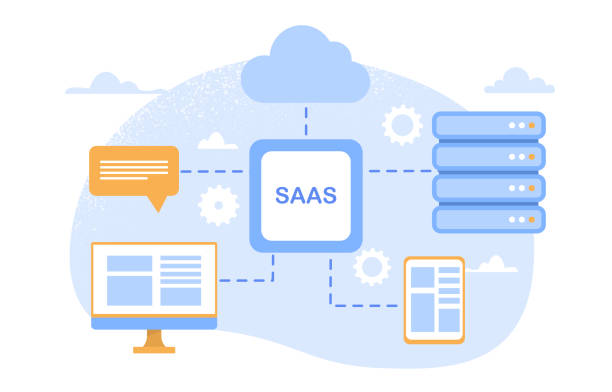
When a business builds a Software-as-a-Service (SaaS) platform, they don’t want to build a completely separate codebase and database for every single business client (tenant) that signs up. They want one massive, centralized system where thousands of clients can securely log in, use the software, and store their data independently.
However, as we move through 2026, the traditional ways of building these digital apartment complexes are fracturing. Enterprise clients are demanding absolute data isolation, global privacy regulations are punishing data leaks with massive fines, and standard databases are buckling under unpredictable usage spikes.
Understanding the future of multi-tenant SaaS architecture is no longer just a technical conversation for your engineering team—it is a foundational business decision that dictates whether your software company can close enterprise contracts or if it will get stuck in the small-business market forever.
At Bunnychain.ai, we build the robust blueprints that allow SaaS platforms to scale without compromising security or performance.
What is Modern Multi-Tenancy?
Let’s bypass the dense engineering textbooks. Multi-tenant architecture is a software framework where a single instance of a software application serves multiple distinct users or customer organizations.
The major challenge has always been balancing resource sharing with data security. If one of your software clients runs a massive data report that slows down the database, you cannot allow that lag to slow down the software for the other nine hundred clients sharing that system.
The future of this field is moving away from rigid, one-size-fits-all setups and shifting toward “Hybrid Isolation Pools.” This means your software dynamically decides when to let clients share digital space and when to give them their own dedicated infrastructure.
Pillar 1: The Death of the Shared Database Model
For the past decade, the standard way to build a SaaS platform was the “Logical Isolation” model. Every client shared the exact same database table, and their data was separated simply by a single column labeled “Tenant ID.”
This was cheap and easy to build, but it has become a massive liability in 2026.
-
The Neighbor Noise Problem: If Tenant A suddenly experiences a massive traffic spike, their heavy database requests clog up the entire system, causing Tenant B, Tenant C, and Tenant D to experience painful software slowdowns.
-
The Nightmare Leak: A single minor coding error by a junior developer could accidentally expose Tenant A’s financial records to Tenant B during a routine login.
-
The Compliance Wall: Enterprise clients, health organizations, and European businesses under strict privacy laws will flatly refuse to sign a contract if their sensitive data lives in the exact same physical database pool as your other clients.
The future relies on “Physical Isolation at Scale.” Modern database engines allow us to spin up micro-databases for each client automatically the moment they sign up, keeping the main code centralized but the actual data completely walled off from the rest of the world.
Pillar 2: Dynamic Customization Without Code Bloat
In the early days of software, if a premium corporate client wanted a custom dashboard layout, a unique data field, or a custom workflow, the development team would copy the entire software code, make the changes manually, and run a separate version for them. Within a year, the team would be managing fifty different versions of the same software, completely paralyzing their ability to launch global updates.
The future of multi-tenant SaaS architecture solves this through metadata-driven systems.
Our developers at Bunnychain.ai design systems where the core software code remains completely identical for every single user. However, when a specific client logs in, the system reads a tiny configuration file that instantly reshapes the user interface, activates custom data fields, and connects to their specific corporate tools. The client gets a fully tailored experience, while your engineering team only ever has to maintain and update one single, clean codebase.
Pillar 3: Zero-Downtime Global Scaling
If your SaaS platform expands into international markets, your architecture has to adapt to geographical realities. You cannot have a client in London experiencing slow load times because your centralized database lives in a data center in San Francisco.
Modern multi-tenancy utilizes “Geographic Sharding.” The architecture automatically detects where a business client is located and routes their specific tenant data to the nearest local cloud server.
Furthermore, global updates must happen seamlessly. In the past, pushing a software update meant taking the entire SaaS platform offline for a weekend maintenance window, frustrating users across multiple time zones. Modern architectures utilize rolling deployments, updating individual tenant segments one by one in the background while the rest of the global platform runs smoothly without a single second of downtime.
Comparing Legacy Multi-Tenancy vs. Next-Gen Architecture
To understand how this technical evolution impacts your corporate agility, let’s look at the lifecycle differences between old-school shared setups and next-generation frameworks.
Under a Legacy Multi-Tenant Setup, data isolation is strictly logical, meaning all user data is lumped into a single database. The Enterprise Sales Viability is incredibly low because large corporate legal teams will reject the shared data risks during compliance checks. The System Scaling Stability is highly fragile, as a traffic surge from a single customer can cause a platform-wide blackout for all users. Finally, the Maintenance Agility is slow and risky, requiring total system downtime whenever updates or bug fixes are deployed.
Under a Next-Gen Multi-Tenant Architecture (The Bunnychain Way), data isolation is physically walled off using dynamic micro-databases. The Enterprise Sales Viability is maximized, allowing your sales team to confidently pass the strictest international data security audits. The System Scaling Stability is perfectly resilient, since workloads are ring-fenced so that individual client spikes never impact the rest of the user base. Most importantly, the Maintenance Agility is completely seamless, allowing continuous, zero-downtime updates to flow quietly in the background while your business scales.
The Bunnychain Multi-Disciplinary Edge
Building a world-class SaaS product requires a flawless balance across three foundational pillars of digital product design:
-
Our Software Architects map out the advanced micro-database pipelines, ensuring data isolation is ironclad, compliant, and lightning-fast.
-
Our Product Designers construct fluid, component-based user interfaces that adapt effortlessly to custom branding, localized languages, and tenant-specific features.
-
Our Growth Marketers market your platform to the lucrative enterprise market, leveraging your superior data security and system performance as an unbeatable competitive advantage.
At Bunnychain.ai, we don’t just write code; we design robust business infrastructure that scales your revenue and secures your market position.
Future-Proof Your Software Product
The companies that continue to build SaaS platforms on basic, old-school shared frameworks will find themselves trapped under a mountain of technical debt, losing their largest prospective clients to more secure competitors.
The future belongs to the platforms that respect data boundaries, prioritize system speed, and invest in a technical infrastructure that can scale globally on demand. By re-architecting your platform around modern multi-tenant principles today, you are turning your software into an institutional-grade asset.
Summary: Your SaaS Architecture Checklist
-
Review your isolation: Does your software currently separate client data using a single database column, or are you utilizing separate data pools?
-
Test the noise limits: What happens to your platform’s overall speed if your largest customer suddenly doubles their data usage?
-
Audit custom work: Are you writing custom code branches for individual clients, or is your system metadata-driven?
-
Check local compliance: Is your software capable of storing a European client’s data strictly inside Europe to meet legal requirements?
-
Eliminate maintenance windows: Can your development team deploy a major backend upgrade at midday on a Tuesday without kicking users offline?
Let’s Engineer Your SaaS Masterpiece
The engineering specialists at Bunnychain.ai are ready to help you evaluate your current software setup, eliminate performance bottlenecks, and build a high-scale multi-tenant architecture designed for long-term market dominance.