Imagine you owned a physical retail store. If the front door was so heavy that 20% of your customers couldn’t open it, or if the aisles were too narrow for someone with a stroller or a wheelchair, you wouldn’t just be being “exclusive”—you would be losing money. Every person who can’t get into your store is a sale that goes to your competitor down the street.
In the digital world of 2026, the “door” to your business is your website. Yet, millions of sites are still built with digital barriers that turn away a massive portion of the global population. This is why we need to talk about the ROI of accessible web design.
At Bunnychain.ai, we believe that accessibility isn’t just a moral duty; it is one of the smartest financial investments a brand can make. When you build for everyone, you win everywhere.
What is Accessible Web Design?
Let’s strip away the technical jargon. Accessible web design is the practice of making sure your website can be used by everyone, regardless of their physical or cognitive abilities. This includes people with visual impairments who use screen readers, people with motor disabilities who use keyboards instead of mice, and even people with temporary “situational” disabilities—like a parent holding a baby in one arm or someone trying to read a screen in bright sunlight.
When you invest in the ROI of accessible web design, you are ensuring that your digital “door” is wide open for every single potential customer.
The Financial Reality: The “Purple Dollar”
Economists often refer to the spending power of people with disabilities and their families as the “Purple Dollar.” Globally, this market represents over 1 billion people with an estimated $13 trillion in disposable income.
In 2026, ignoring this market isn’t just a mistake; it’s a disaster for your bottom line. Research consistently shows that 70% of users with disabilities will leave a website immediately if it is difficult to navigate. By making your site accessible, you aren’t just “being nice”—you are capturing a market segment that your competitors are likely ignoring.
Pillar 1: Accessibility as an SEO Superpower
As an SEO specialist, you know that search engines like Google are essentially “blind.” They can’t “see” your beautiful images or your sleek videos; they can only read your code and your text.
This is where the ROI of accessible web design truly shines. The exact same practices that make a site accessible to a person using a screen reader also make a site more “readable” for Google’s search bots.
-
Semantic HTML: Using clear headings (H1, H2, H3) helps both screen readers and search bots understand the hierarchy of your content.
-
Alt Text: Descriptive text for images allows visually impaired users to understand the “story” of your page, while also telling Google what your images are about, helping you rank in Image Search.
-
Video Transcripts: Providing text for your videos makes the content accessible to the deaf community while also giving search engines hundreds of new keywords to index.
When you build for accessibility, you are accidentally (or intentionally!) building the perfect SEO machine.
Pillar 2: The “Curb Cut” Effect and User Experience (UX)
Have you ever noticed the sloped “curb cuts” on sidewalk corners? They were originally designed for people in wheelchairs. But today, they are used by everyone—people with suitcases, delivery drivers with carts, and parents with strollers. In design, we call this the “Curb Cut Effect.”
When you implement the ROI of accessible web design, you improve the experience for all users.
-
High Contrast: Clear color contrast helps someone with low vision, but it also helps a businessman reading your site on his phone in the middle of a park.
-
Keyboard Navigation: Making a site easy to use without a mouse helps someone with a motor disability, but it also makes your site feel “snappier” and more efficient for “power users” who prefer keyboard shortcuts.
-
Simple Language: Writing in clear, simplified language helps people with cognitive disabilities, but it also helps the average user who is in a hurry and just wants to find an answer.
Better UX leads to lower “Bounce Rates,” higher “Dwell Times,” and ultimately, more conversions.
Pillar 3: Reducing Legal and Operational Costs
In 2026, the legal landscape has become very clear: digital accessibility is a civil right. The number of lawsuits against companies with inaccessible websites has skyrocketed over the last few years.
The ROI of accessible web design includes “Risk Mitigation.” It is much cheaper to build an accessible site from the beginning than it is to pay for a legal settlement and then pay a developer to fix a “broken” site under pressure.
Furthermore, accessible sites are easier to maintain. Because they rely on clean, standard code, they are less likely to “break” when browsers update or when you add new features. This saves your development team time and saves your business money in the long run.
Comparing Inaccessible vs. Accessible Performance
To see the real-world value, let’s look at the difference in performance metrics.
In an Inaccessible Website, the “Market Reach” is limited, automatically excluding up to 20% of the population. The SEO Potential is hindered by “thin code” and a lack of descriptive metadata. The User Retention is low, as frustrated users leave quickly. Finally, the Legal Risk is high, leaving the business vulnerable to costly litigation.
In an Accessible Website (The Bunnychain Way), the “Market Reach” is 100%, welcoming every potential customer. The SEO Potential is maximized through rich, semantic data that search engines love. The User Retention is high, as the “Curb Cut Effect” creates a smooth experience for everyone. Most importantly, the Legal Risk is eliminated, providing peace of mind for the business owner.
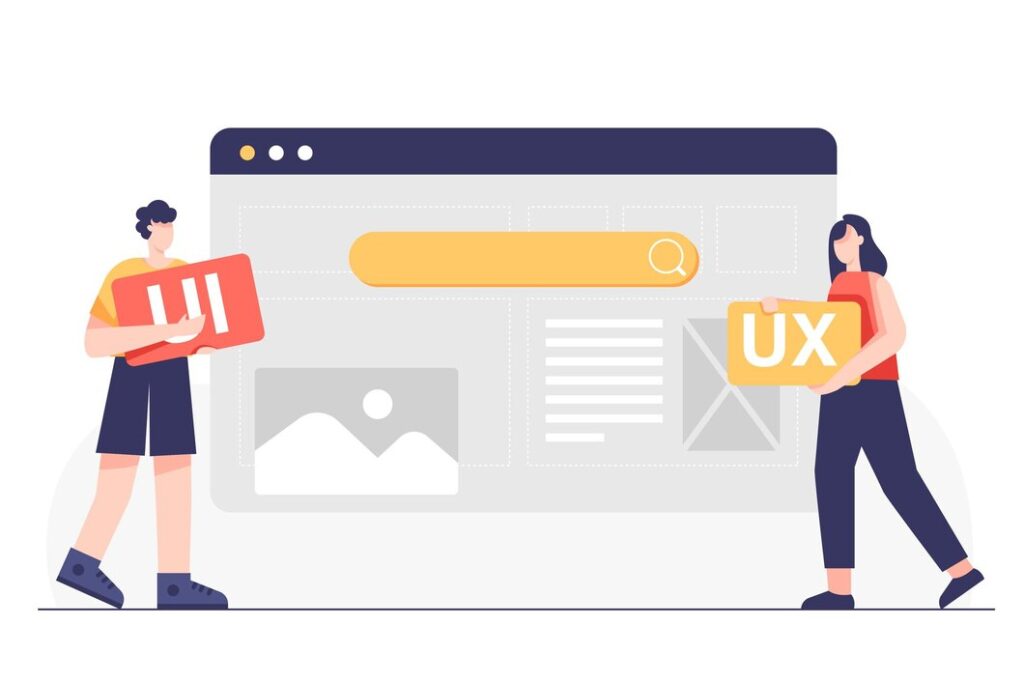 Why Integrated Strategy is Necessary for Accessibility
Accessibility cannot be an “afterthought.” It isn’t a plugin you can just turn on. It requires a unified effort from three key areas:
-
Our Developers write the clean, “standard-compliant” code that serves as the foundation.
-
Our Designers choose the colors, fonts, and layouts that ensure every user can see and navigate the site easily.
-
Our Marketers ensure that the content is written in an inclusive way that speaks to the widest possible audience.
At Bunnychain.ai, we don’t treat accessibility as a separate task. We build it into our DNA. We know that a site that works for everyone is a site that works harder for your business.
The Future of Inclusion in 2026
As we look toward the future, we see that “inclusive design” is becoming the gold standard of the tech industry. Users in 2026 don’t just want a product; they want to support brands that align with their values. By prioritizing the ROI of accessible web design, you are sending a clear message: We value every customer.
In a world where trust is the most valuable currency, inclusion is your greatest asset.
Summary: Your Accessibility ROI Checklist
-
Audit early: Don’t wait for a lawsuit to check your site’s health.
-
Alt-Text everything: Give your images a voice for both users and Google.
-
Color check: Ensure your text is easy to read against its background.
-
Code clean: Use semantic HTML to build a strong foundation.
-
Keep it simple: Write for clarity, not for complexity.
Ready to Open Your Digital Doors?
At Bunnychain.ai, we are ready to help you harness the full power of an inclusive digital strategy. We combine design, development, and marketing to ensure your website isn’t just a placeholder, but a high-performing growth engine that welcomes everyone.